Interesting Neanderthals weren't the genetic disasters science thought

Freija

Forum Wench
Joined
May 20, 2026
Messages
430
Reaction score
837

The Last Neanderthals Weren’t the Genetic Disasters We Thought​

The ancient hominins were likely more diverse and lived in well-connected communities, a new study suggests.​

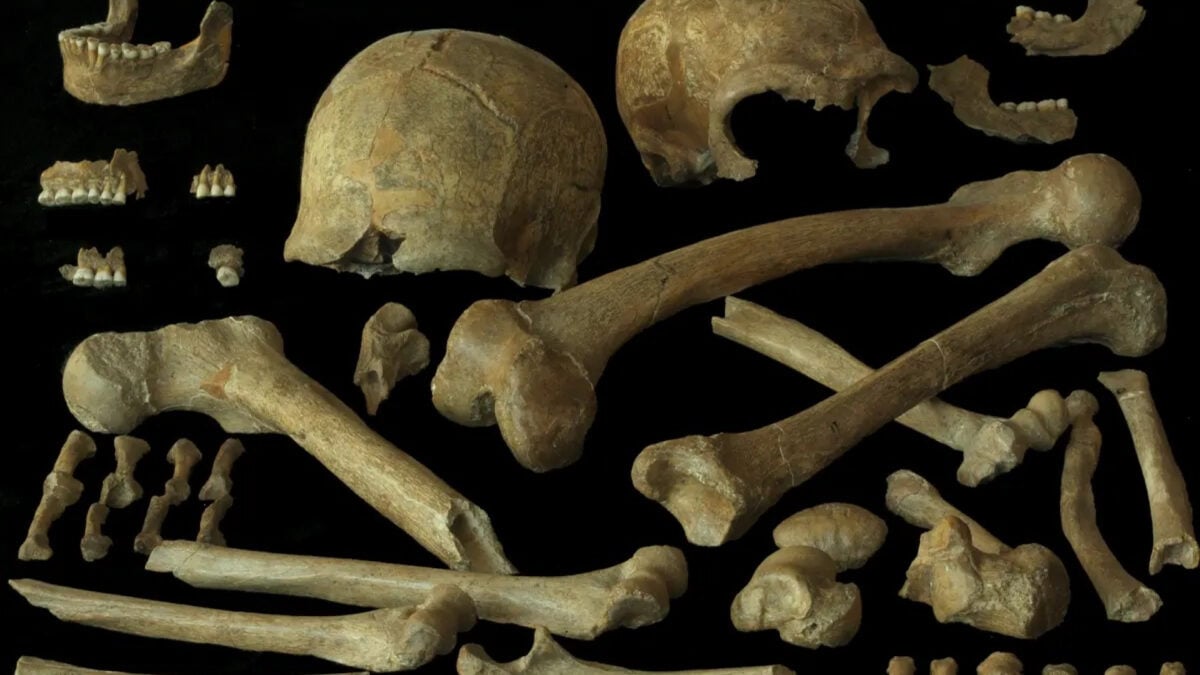
It’s rare that ancient DNA from Neanderthals remains as intact as scientists would like. But on the lucky occasion that researchers do find high-quality genomes, the implications are far-reaching—especially if they contradict some common assumptions about these long-gone hominins.

In a study published today in Nature, researchers report results from DNA sequencing of 27 Neanderthal remains across ten sites in Belgium and France. The dataset includes the fifth high-quality Neanderthal genome constructed from mitochondrial remains. As a result, the team was able to conduct large-scale population analyses for late Neanderthal populations before their extinction around 40,000 years ago. The investigation revealed surprising trends in Neanderthal communities that contradict some popular assumptions and raise new questions about the livelihoods of these long-gone ancient humans.

“This study highlights the power of ancient DNA to reveal variation within Neandertals on a much finer scale than was previously possible,” Janet Kelso, the study’s co-author and a researcher at the Max Planck Institute for Evolutionary Anthropology in Germany, said in a statement. “Rather than viewing late Neandertals as a single declining population, we are beginning to recognize a more complex picture of regional diversity, connectivity, and population history.”
1782345717718.pngWhere did they go?​

Of all known branches of ancient humans, Neanderthals are arguably the most famous and also more understood by experts, according to Chris Stringer, a human evolution expert, in a blog for the U.K. Natural History Museum. That said, researchers disagree on how the species went extinct after surviving for more than 350,000 years.

Some propose that we, Homo sapiens, won the favor of natural selection, with greater genetic diversity and better-connected communities. There could have also been drastic shifts in climate that contributed to Neanderthal extinction, Stringer explained. These hypotheses come from previous research from as early as 1997, when ancient DNA recovered from Neanderthal fossils indicated that the hominins were “relatively low in numbers and diversity during their last 20,000 years,” Stringer wrote. That idea was further supported by the genome of a female Neanderthal from the Altai Mountains in Siberia, which strongly suggested there was long-term inbreeding in her local population.

Enter more information​


Again, high-quality Neanderthal genomes came few and far between, so “most questions about the regional diversity of Neanderthals have been difficult to address,” Alba Bossoms Mesa, the study’s first author and a doctoral researcher at the Max Planck Institute for Evolutionary Anthropology, said in the statement.

In that sense, the new study complicates our understanding of different Neanderthal communities. For the analysis, the team reconstructed Neanderthal genomes using a combination of the latest information and previously published data. This allowed them to construct phylogenetic trees and trace the relationships between Neanderthal individuals.

Misconceptions, questions​


Notably, these Neanderthals lived alongside early modern humans. The team found that, while Neanderthals contributed genetic material to early modern humans, there didn’t seem to be gene flow occurring in the opposite direction. What’s more, when the researchers compared measures of genetic diversity and loads in Neanderthal genomes, they couldn’t find evidence that later Neanderthals carried an increasing number of harmful mutations—as suggested by some in explaining their demise.

“The currently available Neanderthal genomes suggest that the hominins’ extinction did not happen uniformly, but rather that some populations experienced long-term demographic decline and others disappeared more abruptly,” Carles Lalueza-Fox, an evolutionary biologist at the Natural Sciences Museum of Barcelona in Spain, wrote in an accompanying News & Views on the paper.

There are many ways in which each scenario could have played out, noted Lalueza-Fox, who wasn’t involved in the new work. “These differences could reflect varying forms of interaction with modern humans arriving in a region—ranging from conflict to inclusion into modern groups,” he said.

Peter added the new results “show that the picture emerging from one region cannot simply be applied to all Neanderthals,” which also means that the new study doesn’t necessarily rule out the possibility of theories like demographic vulnerability. Either way, Lalueza-Fox commended the study for expanding the scope of our investigations of Neanderthals.
 
Ninurta will be pleased to hear that.

Or simply after more than 350,000 years, they had their time. Now time for new humans. 🤷‍♂️
 
kind of hope we intermingled and they didn't so much as die out, as continue with us.

I wonder if maybe human males didn't find the Neander females desirable. Did they find our women preferable?
 
I've studied Neanderthals for most of my life, since I was a teenager, and have witnessed the "changes" they have undergone in our understanding over that time span. A lot of those changes were not driven by empirical evidence so much as they were driven by wishful thinking on the part of some politically-correct scientists within the community.

While this study is intriguing, it is far from conclusive. I think the biggest flaw in it may be the fact that they concentrated on mitochondrial DNA rather than autosomal DNA, or better yet a far more robust appraisal including Mitochondrial, autosomal, and Y-DNAs. See, mitochondrial DNA is but a tiny segment of the overall picture, and is passed ONLY through the female lines, from mothers to children of both sexes. Limiting the study to such a small segment of DNA has the potential to well and truly skew the results in a particular direction.

Neanderthals existed for around 250 thousand years (in contrast to the claimed "350 thousand years" - they're attributing 100 thousand years too much time to them nowadays), and went extinct around 26 to 28 thousand years ago, compared to the claimed 40 thousand years ago we see in modern studies. Always remember - absence of evidence is not evidence of absence. Just because we have not found a thing does not mean it is not there to be yet discovered.

Most Neanderthal groups appear to have been partrilocal. That is, females left their native groups to reside with male mates who stayed within their own native groups. That will have an effect on the study of purely mitochondrial DNA, particularly if the study of Neandethal DNA's assimilation into modern humans is limited to mitochondrial DNA studies. To make matters worse, some groups DID have a penchant for inbreeding, just as some modern groups of humans have. Folks will procreate. It's a biological imperative. When partner choices for matings are limited, as in groups of people who are more or less isolated from the rest of the population through things like geographical barriers, that procreation is going to take place with more consanguineous individuals. That has been demonstrated in some Neanderthal populations. It's real, and it's not just a Neanderthal thing, it's an organism thing, demonstrated in pretty much all organisms that have found themselves isolated in one way or another.

Introgression of "early modern human" DNA into some Neanderthal populations has also been demonstrated, contrary to the claim in this study. That's just another danger of limiting the study to mitochondrial, female-borne, DNA. The biggst part of that human-to-Neanderthal DNA introgression took place much earlier than expected, before anatomically modern humans were present in Europe, before even the "out of Africa" human migrations are supposed to have taken place around 60,000 years ago. Most if it took place around 150,000 to 100, 000 years ago. Politically-correct "scientists", in their efforts to defend the failing "out of Africa" theory, will apply a fudge-factor to the data showing that early introgression by saying "well, that was just an earlier human migration out of Africa that went extinct. Real humans still didn't come out of Africa until 60,000 years ago". Extinct my ass. We're still here, modern humans as modern humans. We didn't go "extinct", that's just word play attempting to defend a faltering theory. "Science" is full of silliness like that.

I think perhaps a major factor in this study, and why it was limited to mitochondria, lies in the possibility that some of these researchers were just trying to engineer words like "diversity" into their study.. Of course Neanderthals were diverse - they had 250,000 years of mutations building up, and regionally isolated pockets of their society to concentrate those varying mutation in. It doesn't require political-correctness or extremely selective data-limited studies to explain away.

The patrilocal habits of Neanderthals is going to concentrate DNA from females more so than males in anatomically modern human DNA. That's just an artifact of demographics. More females in a group means that there will be proportionally more DNA from those females in that group, whereas a dearth of males in a group means there will be proportionally less DNA from males in that group. I expect that, as time goes on, we will find that the DNA introgression from modern humans into the Neanderthal population will also have arrived there through female lines. It's just demographics, not biology or politics. The male Y-DNA will have stayerd in the patrilocal groups of the males, thus flying under the radar and going laregly unnoticed in te cross-breeding analyses.

As I said, I've had an interest in Neanderthals since I was a teenager, before all the DNA analyses were even possible. Imagine my surprise when I found that I carry more neanderthal DNA than 82% of the rest of modern humanity, and my son carries more Neanderthal DNA than 94% of modern humans. That means that his ma also had to have quite a bit higher proportion of Neanderthal DNA than the average human for that mixture to work out that way. I think, personally, that the abundance of Neanderthal DNA in me is what surreptitiously pulled me towards an interest in Neanderthals. Blood tells.

It's also probably what made me such a holy terror with pointy sticks.

ETA: I've also done some of my own reconstructions of Neanderthal appearances, not using AI, but rather taking a different tack, modifying actual photos of anatomically modern humans by applying things like average bone proportion measurements across Neanderthal populations for bodily proportions, and sometimes using descriptions of "Almas" reports from thje Caucasus mountains (on the chance that such cryptids may be, as Myra Shackley believed, modern survivals of ancient Neanderthals), and those reconstructions came out looking a bit different than AI reconstructions. In general, Nenaderthals looked a lot like modern human "dwarves" in bodily proportion, scaled upwards to Neanderthal heights, and adding quite a bit of muscle to the equations. Their distal limb proportions (forearms, shins) were between 80 and 90% shorter, proportionally, than modern humans, Their heads were larger, both proportionally and empirically, giving them a "big-headed" appearance. Their eyes, likewise, were proportionally larger, and set farther apart than in modern humans, giving them better night visoin as well as better deprth perception... but radically affecting their appearance., making them appear somewhat "bug-eyed". Their waist, in general, and judging by the rib cage to hip transition, were practically non-existent. No "hourglass figures" among them.

Their bodies, overall, were proportionally wider than found in most modern humans, going by the collar bone to height ratio, and more robust overall, going by bone wall thickness and muscle attachment points.

All in all, it's hard to find a "pretty" Neanderthal using modern sensibilities of appearance, but as I said above, folks are gonna mate with what's available. As a result, you get folks like me, with more Neanderthal DNA than the average.

Can't post the images I worked out, though. For the most part, they are pretty NSFW, since I still have no idea what sort of clothes to put on them, or indeed if any. We do know that Neanderthals didn't have things like bone needles for tailoring clothes, so the sky is pretty much the limit in either direction.

.
 
Last edited:
I think many "misunderstandings" might stem from the generational slave race created by Neanderthal/CroMagnon breeding. 😎
 
Back
Top Bottom