

Freija
Forum Wench
- Joined
- May 20, 2026
- Messages
- 221
- Reaction score
- 382
Sitting Too Little May Be Just As Risky As Sitting Too Much, Study Finds
Farmers and construction workers sitting under 2 hours a day faced higher mortality risk in a major new study from China.
 studyfinds.com
Cheezus, will they make up their damn minds? First it was eggs bad, coffee bad, sitting bad and how many times are things going to flip from bad to good? My philosophy is that you are going to die anyway no matter what you do so why not do what you enjoy and makes you happy. I might not feel this way if I wasn't already 128 years old but you reach a certain point you no longer GAF.
Why Telling Some Workers to Sit Less Could Be Bad Advice, According to Science
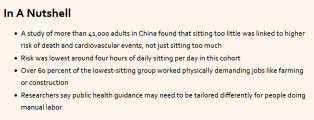
For decades, public health messaging has pushed a single, seemingly obvious idea: sit less, move more. A large study following more than 41,000 adults in China for nearly 12 years is making that advice considerably more complicated, and the group it matters most for might not be who many people expect.
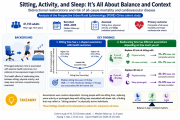
Published in the Journal of Sport and Health Science, the study tracked associations over time in a large Chinese population rather than establishing direct cause and effect. Researchers found the combined risk of death or a major cardiovascular event was lowest around four hours of daily sitting. People sitting fewer than two hours a day faced a higher risk of that combined outcome, driven especially by higher mortality, than those sitting a moderate amount, and that finding cuts against the conventional assumption that any reduction in sitting is automatically an improvement.
More than 60 percent of the people in the lowest-sitting group, those reporting fewer than two hours a day, were employed in physically demanding occupations like agriculture or construction. These were not sedentary people who had found a way to stay active. They were on their feet all day doing hard, unrelenting physical labor.
That context matters for understanding what the data show. Researchers point to a phenomenon already documented in occupational health research called the “physical activity paradox.” People whose jobs involve sustained, intense physical effort throughout the day do not always gain the same heart health benefits as people who exercise by choice during leisure time. A farmer spending eight hours tending fields or a construction worker swinging a hammer all day may technically be “active,” but that kind of relentless, necessity-driven exertion is very different from a morning jog or a gym session chosen freely after a desk job. For workers already under significant physical strain, more rest, including sitting, may be associated with better health outcomes, though the study does not directly confirm this mechanism.
The rest of the story can be found at the above link.