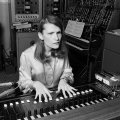
I can't imagine having a house. techno and trance music thread without the pioneering work of Wendy Carlos.
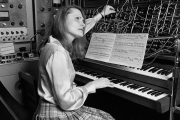
Wendy Carlos is a pioneering composer and performer of electronic music who introduced the world to a new sonic palette in the form of synthesized sounds. She was born Walter Carlos in 1939 in Pawtucket, Rhode Island, eventually transitioning to female in the 1970s and taking the name Wendy.
Carlos demonstrated an early aptitude and affinity both for music and science and technology. She began studying piano at the age of six and was a precocious student with an aptitude for math. She studied physics and music at Brown University. She wrote her first composition at 10 and built her own computer at 14, which earned her a scholarship from the Westinghouse Science Fair. In 1965, she earned a degree in music and physics from Brown University, then earned a master’s in music from Columbia University, in no less than the very first electronic music program of its kind in the United States. Carlos dove into work as a recording and mastering engineer for Gotham Records shortly thereafter,
While at Columbia, she also began working closely with Robert Moog, an engineer and the manufacturer of the Moog synthesizer, the first synthesizer made for commercial use. Carlos advised Moog on technical refinements to the instrument, particularly with regard to musical expression and tone color. Moog said of her expertise: “[Wendy] used techniques that had been available for years—but used them better.”
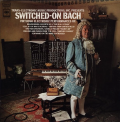
Around 1967, Carlos met Rachel Elkind, executive secretary to Goddard Lieberson, the president of Columbia Records, who would become her producer. Elkind quickly recognized Carlos’s talent after hearing her Moog rendition of J.S. Bach’s Two-Part Invention in F (BWV 779), and suggested producing an entire album of Bach transcriptions. The result was Switched-On Bach (1968), a reimagining of Bach favorites on the Moog synthesizer. Switched-On Bach was an unexpected smash hit, becoming the first platinum-selling classical album. It remains one of the best-selling classical albums of all time. Three other albums of Baroque transcriptions followed: The Well-Tempered Synthesizer (1969), Switched-On Bach II (1973), and Switched-On Brandenburgs (1980).
By the time of her break-out album "Switched-On Bach" in 1968, Carlos had built an electronic music studio valued at nearly $100,000 in today’s dollars, which she used in that recording (itself a grueling 1100 hour long endeavor). If "Moog 900 Series – Electronic Music Systems (1967)" was a technical demonstration of the capabilities of the Moog, "Switched-On Bach" was a musical demonstration. Carlos initially wanted to record an album of her own compositions for the album, but the producer argued that, if the instrument was experimental, the music should be familiar, so listeners would be more likely to give it a shot.
This proved to be an astute calculation, as the album was an immediate yet unexpected breakout hit, with Glenn Gould hailing "Switched-On Bach" as the “album of the decade.” The recording won three Grammy Awards (for Best Classical Album, Best Classical Performance, and Best Engineered Classical Recording), spent three consecutive years at number one on the classical music charts, acquired certified Gold status in 1969, certified Platinum status in 1986, and led Newsweek to call the Moog the “Steinway of the Future.” Listeners praised the album for Carlos’s juxtaposition of radically alien sounds with the album’s timeless source material as well as a distinct contrapuntal clarity, which the Moog complemented well as a single-voiced instrument.
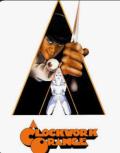
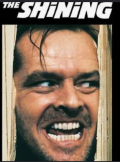
In addition to her vast contributions to the development and improvement of synthesizer technology, Carlos has been a prolific film composer, scoring A Clockwork Orange (1971), The Shining (1980), TRON (1982), and Woundings (1998). As in Switched-On Bach, Carlos created new sonic landscapes out of older music for the title themes of A Clockwork Orange and The Shining, drawing inspiration from Henry Purcell’s Music for the Funeral of Queen Mary (1695) and the plainchant melody Dies Irae, respectively.


Despite her early acclaim, between 1969 and 1979, Carlos disappeared almost entirely from public view, finding it increasingly difficult to maintain an outward appearance as a man while feeling as though she were a woman. Not long after the release of Switched-On Bach, she began her gender transition by taking hormones. She began living mostly as a woman and only appeared as Walter when she was forced to make public appearances to promote her work. At a 1969 engagement with the St. Louis Symphony, Carlos recalled struggling to leave her hotel room dressed as a man: “I began crying hysterically. I couldn’t do it. Rachel [Elkind] cajoled me. Eventually I pasted on my sideburns and put on a wig to hide my hair, which was pretty long at the time and streaky. I filled my pores with dirt from an eyebrow pencil to simulate five-o’-clock shadow. I tried to lower my voice as bottom-heavy as it could get. Tried to be macho. It couldn’t have mattered less.” Carlos eventually had sex reassignment surgery and came out as transgender in a candid 1979 Playboy interview. She said of this dark period of her life, “I lost a decade as an artist.”
She took an enormous risk to be publicly herself, and paved the way for a generation of musicians to tread new musical waters and be unabashedly themselves, both in their personal lives and their musical ones.
I used to have a copy of that Playboy magazine but lost it over the years. Holy crap, that was 47 years ago.

I can only imagine how hard playing dress-up must have been.
This video tells a pretty complete story
And an interview from the BBC. There is a long version of this but I could not find it.
Wendy Carlos is 86 years old and living in New York city.
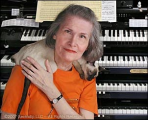
Thank you Wendy for being an inspiration and for helping my mother understand I wasn't the only one.
Sources:

How Electronic Music Pioneer Wendy Carlos Reinvented Synthesizers, Bach, and Herself
Celebrate the pioneering composer of movies like "The Shining," whose classical chops and technical ingenuity made her an icon of electronic music.
 www.classicalwcrb.org

Wendy Carlos: Synth Visionary - Classical California
Explore the life of Wendy Carlos, a pioneer in electronic music, known for her work with the Moog synthesizer and her groundbreaking album, Switched-On Bach.
 www.classicalcalifornia.org